

Incentive programs play a critical role in expanding EV charging infrastructure. They help bring projects to market in communities that might otherwise lack access, particularly because many programs offer enhanced support for disadvantaged communities facing greater barriers to deployment. For these efforts to succeed, strong coordination between public funding entities and the private partners responsible for building the infrastructure is essential. Just as important is the timely processing of incentive payments once projects are completed and submitted, because reimbursement speed directly affects the pace and sustainability of deployment. Furthermore, because the performance of incentive programs are evaluated based on the number of chargers deployed, impacts to pace and sustainability of deployments can significantly influence future budgetary allocations and strategic goals.
Green Water and Power has participated in more than 45 incentive programs across California, Arizona, New Mexico, Colorado, Connecticut, Illinois, Massachusetts, New Jersey, New York, Oregon, and Washington. That breadth of experience provides a practical perspective on how incentive programs perform, particularly in terms of payment processing timelines.
The purpose of this blog is to share Green Water and Power’s experience across the many programs in which we have participated and to highlight the need for adequate resources and administrative support. A commercially reasonable timeline for payment after project completion is vital to the long-term success of these programs. When payments are processed efficiently, private-sector partners can continue delivering projects effectively for clients, utilities, and third-party funding partners alike, particularly because they often carry significant upfront costs, including payroll, materials, and other project-related expenses, long before reimbursement is received.
Before reviewing the data, we also want to recognize the utility teams, third-party program implementers, and state and municipal staff who administer these incentive programs. Their work is essential, and the progress achieved to date would not be possible without their dedication and effort.
We recognize that incentive processing timelines are shaped by a range of operational and administrative factors, including program complexity, staffing capacity, turnover in key roles, evolving policy requirements, and other issues outside any one party’s control. This blog is intended to contribute to a constructive conversation about how programs can be structured and supported for long-term success. With the right resources, clear processes, and strong collaboration between public agencies, program administrators, and private-sector partners, these programs can operate more efficiently and deliver even greater impact.
Below is a summary of the data reviewed for this analysis
Table 1. Projects Aging from Final Submission to Incentive Payment Received
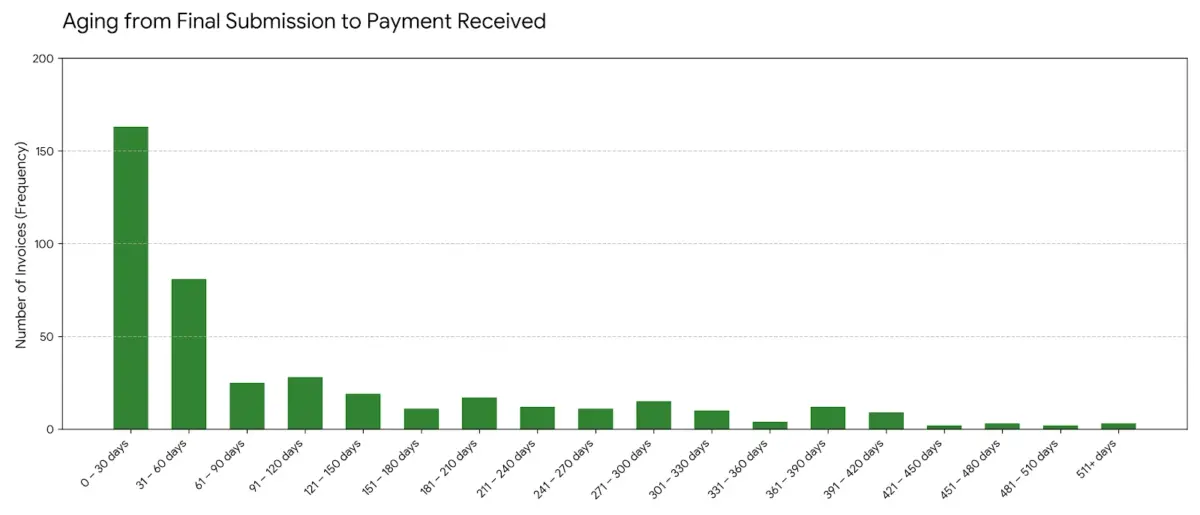
As shown in the dataset, processing times vary significantly from project to project. However, for the majority of projects included here, incentive payments were received within 60 days or less, which aligns with a commercially reasonable timeframe.
Table 2. Project Average Aging by Rebate Program – California
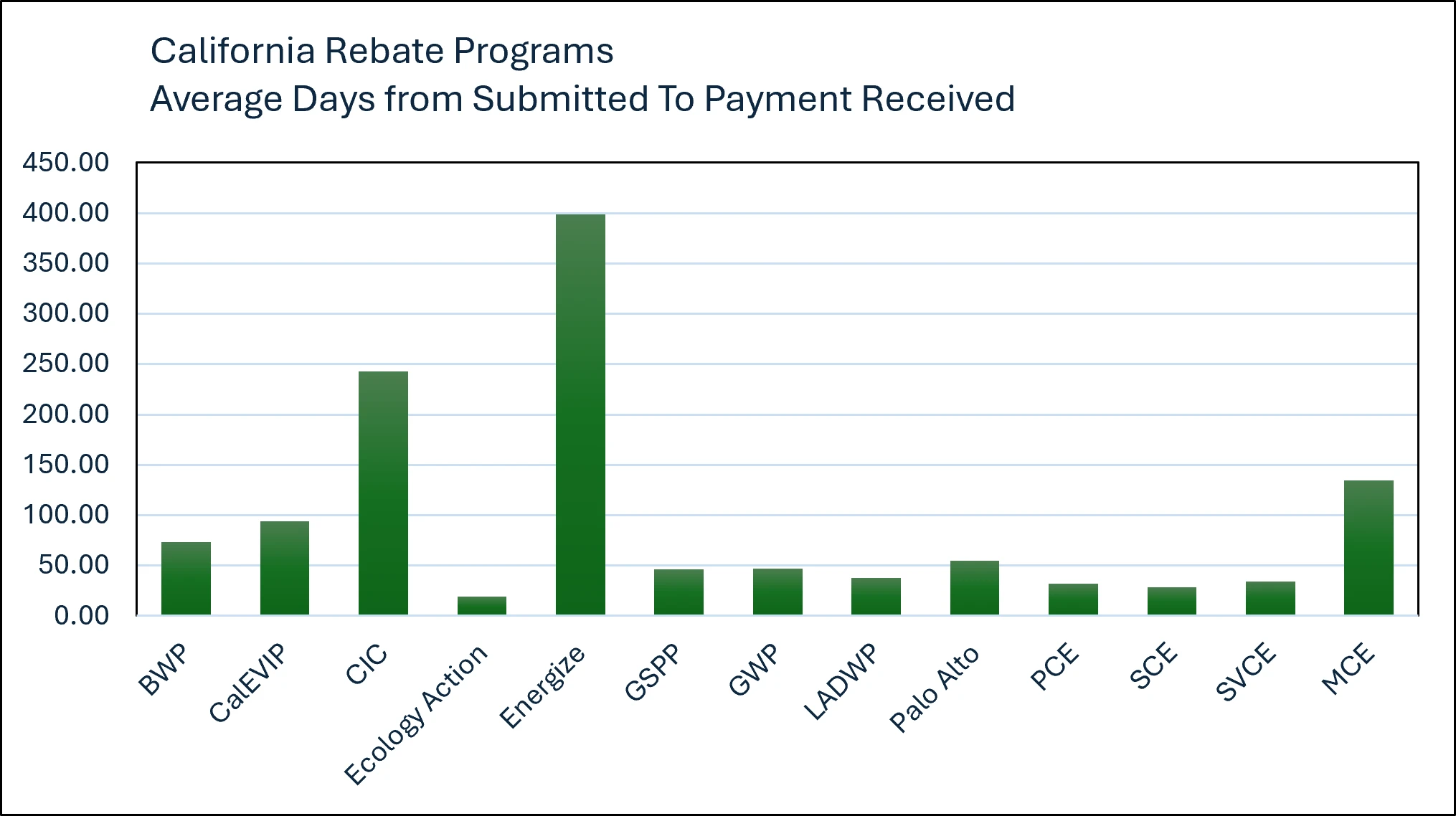
This graph shows the average number of days between final submission and payment across California rebate programs. While most programs fall within the 60-day range, a small number of outliers materially extend the average.
Table 3. Project Average Aging by Rebate Program – All Other States
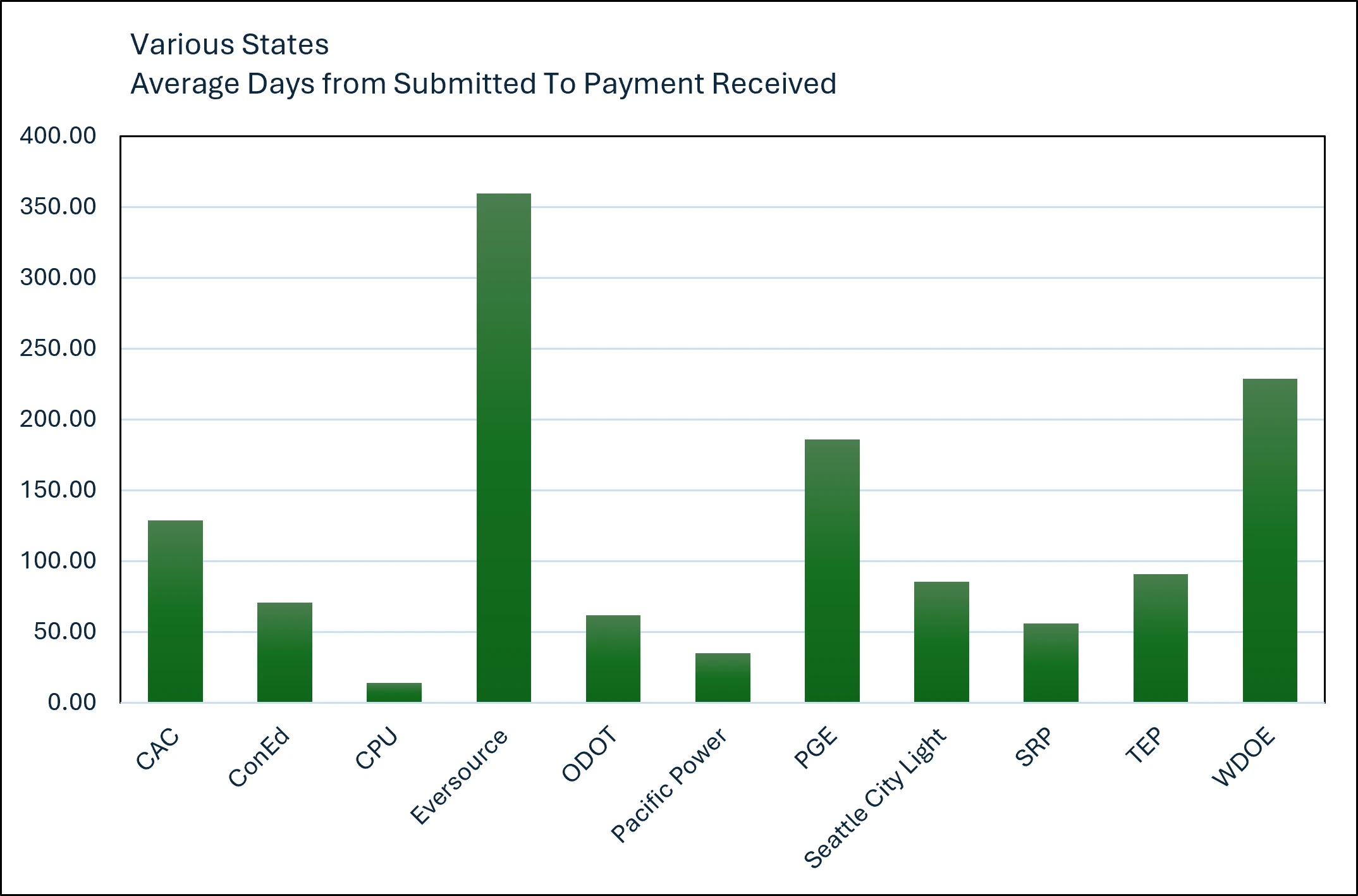
This final graph highlights programs outside California and their average time from final submission to incentive payment. As with the California data, most programs fall within or near the 60-day range, though a few outliers remain.
Incentive programs and private-sector partners like Green Water and Power have already made meaningful progress in advancing transportation electrification, but continued momentum will depend in part on whether payment timelines remain commercially viable. Predictable, timely reimbursement helps ensure that experienced delivery partners can continue bringing critical infrastructure to the communities that need it most. If these programs are expected to scale, the administrative systems that support them must scale as well.